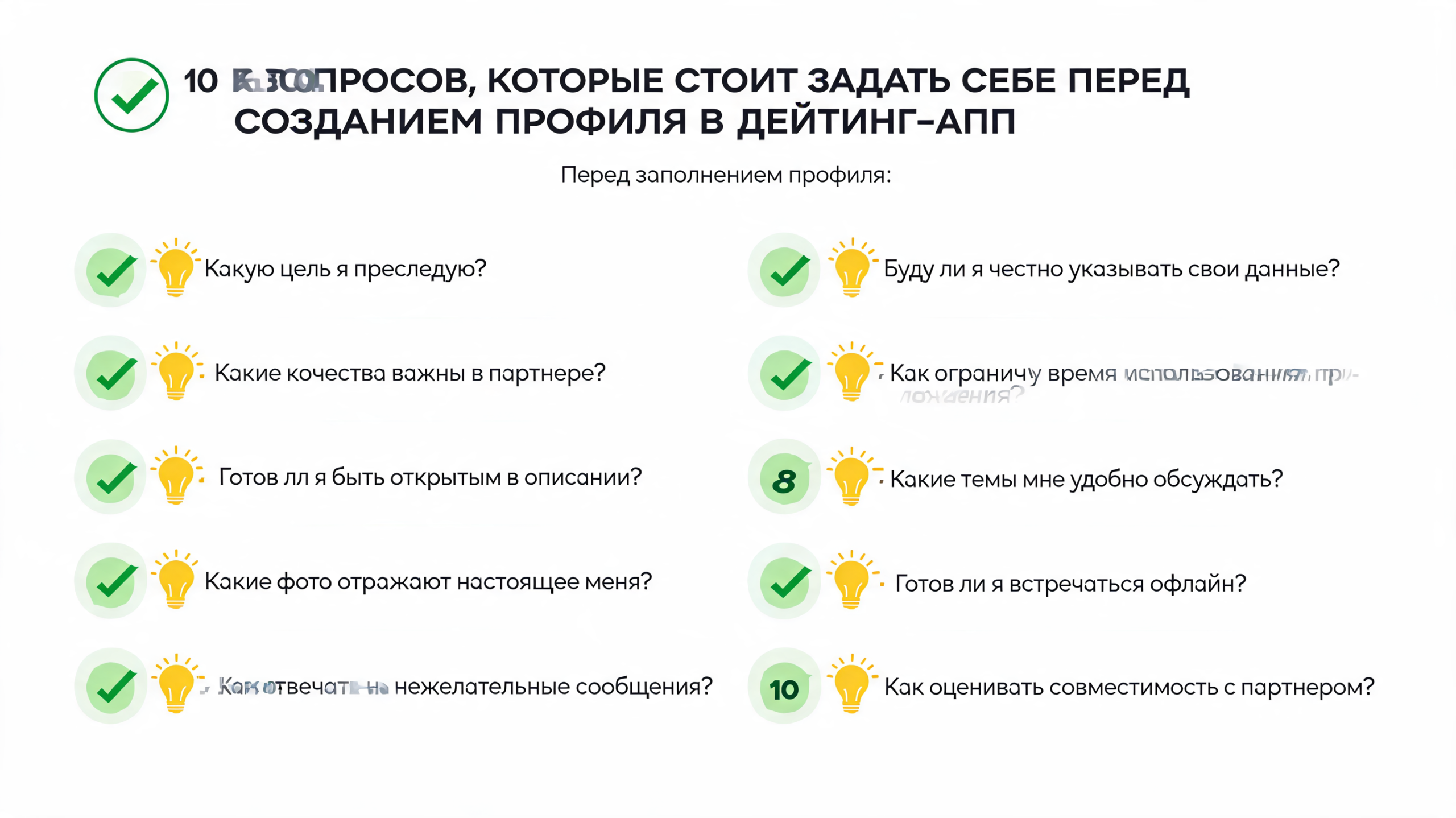
I have a theory: 90 percent of success in online dating comes down to getting three simple things right. Everything else is noise that distracts from what matters. I analyzed data from several services, talked to psychologists and startup founders, and compiled the results into one practical guide. No fluff—just proven data.
Step One: 15 Minutes That Change Everything
A 2025 study by Unison, based on a sample of 5,000 users, revealed a striking result: users who spend 15 minutes or more setting up their profile and evaluating visual preferences get 2.3 times higher quality recommendations. The reason is simple: the algorithm needs enough data to understand your type. Fifteen minutes is the minimum threshold.
Important: don’t try to guess the “right” answers. Mark the people you actually like, not the ones you think you should like. The algorithm isn’t an exam; you can’t cheat it. But you can cheat yourself by choosing socially acceptable options instead of your true preferences. This is the most common mistake that undermines the algorithm’s work.
Another practical tip: use high-quality, natural photos. Research shows that smiling photos receive 40 percent more positive ratings. Full-body photos give the algorithm 25 percent more information to analyze. Avoid group shots—they confuse the system.
Step Two: A First Message That Works
In 2024, the Unison team analyzed half a million first messages. Half a million—not five hundred, not five thousand. That’s data you can build confident conclusions on. The results: personalized messages get 3.2 times more responses than generic templates. Questions work 2.5 times better than statements. The optimal length is 40 to 80 characters.
“Hi, how are you” is not a message. It’s a canned line you send to everyone, and you get predictable results. Even one phrase tied to the person’s profile multiplies your chances. “Saw you were in Thailand—how did you like the rainy season?” works better than any generic compliment.
Timing also matters. Messages sent between 7 PM and 10 PM get 25 percent more responses. Why? Because people are relaxed after work, no deadlines or meetings, they’re open to chatting. Morning messages sent between 7 AM and 9 AM usually go unanswered—people are getting ready for work and not in a romantic mood.
Step Three: From Chat to Real Meeting
Research shows the optimal window between the first message and suggesting a meeting is 3 to 7 days. If you suggest a meeting on the first day, it comes off as pushy. If you chat for more than a week, interest starts to fade: you’ve built up a fantasy image that almost certainly won’t match reality.
Psychologist Anna Kovaleva, a specialist in online relationships with 15 years of experience, explains: four days is the sweet spot. It’s enough to gauge basic compatibility, but not enough to build castles in the air. 84 percent of users who met within a week after an AI recommendation rated the meeting 4 out of 5 or higher. The odds are in your favor.
And the last, most important thing: don’t try to be someone else on the first date. The algorithm has already matched you with a compatible person. If you start pretending, you’ll break the whole system. Trust the data. It’s more accurate than your situational intuition.
In online dating, as in any skill, the secret isn’t in secret techniques but in discipline. Spend 15 minutes setting up your profile. Write a thoughtful first message. Don’t delay suggesting a meeting. And above all, don’t try to fool the system. It’s on your side. Three simple steps that change everything. Proven by data.
Also read: creating a profile, dating tips, how to fill out a profile