Imagine a market where 85 percent of sellers trade the same product, 90 percent of new stores close within the first year, and consumers openly admit they hate the store but keep going there every day. Welcome to the online dating industry. A market worth over $5.6 billion, built on a conflict of interest between what users need and what the business needs.
The Economics of Loneliness: How the Business Works
The online dating market is valued at $5.6 billion according to Statista at the start of 2025. Annual growth is 10-20 percent. Every month, more than a hundred new apps launch worldwide. It would seem like a thriving industry. But if you look at the structure, the picture changes.
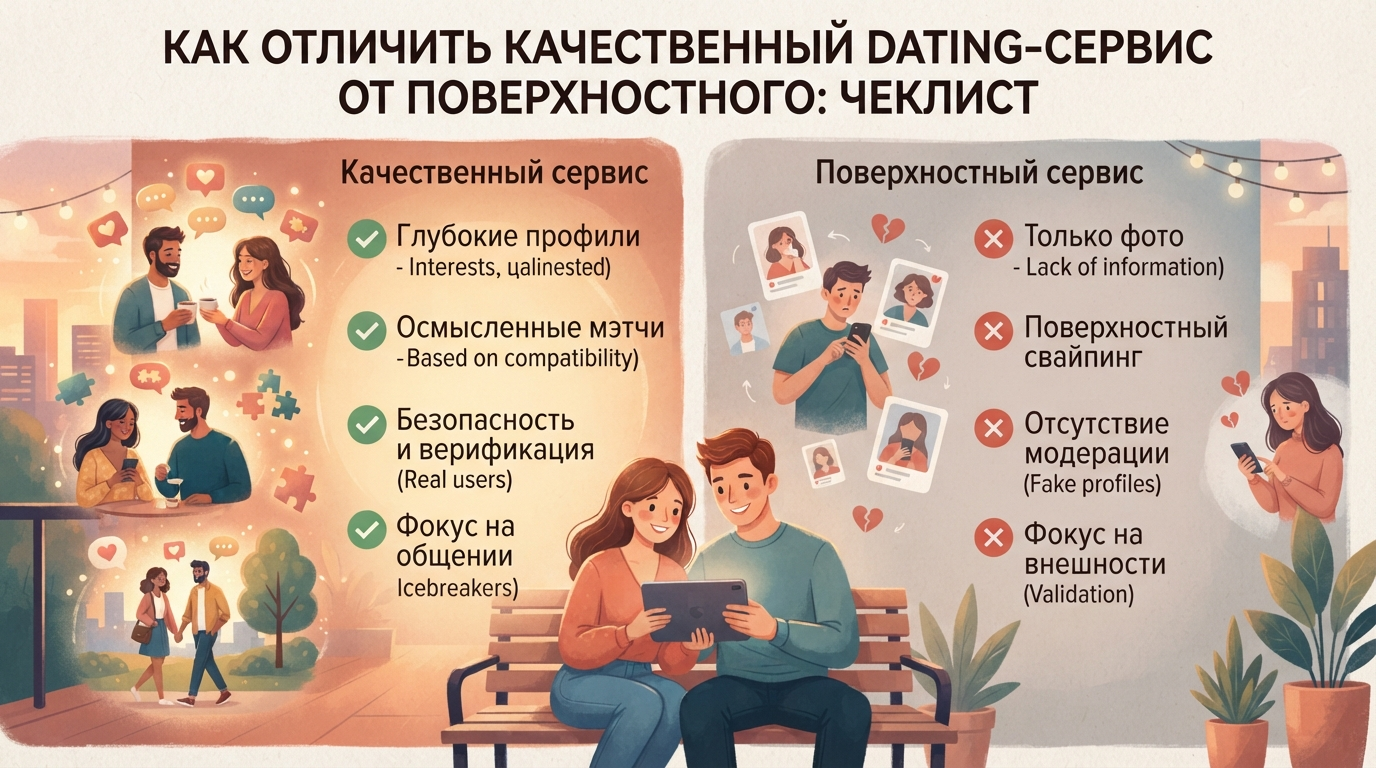
85 percent of all dating apps are variations on Tinder. The same swipe, the same algorithms, the same business logic: keep the user inside at any cost. The more time you spend in the app, the more ads you see, the higher the chance you’ll buy a premium subscription. Your goal is to find a partner and leave. Their goal is for you to stay. This is a classic conflict of interest that is not solved by design or functionality.
Former Tinder product manager Jonathan Bader gave a candid interview to Wired magazine in 2024. “We measured success not by the number of dates,” he said, “but by the time spent in the app. A good day is when a user spent an hour with us. A great one is when they bought Gold. A successful match was a problem for us, because after it, activity drops. The person stops swiping. And that means they stop paying.”
Consumers Are Ready for Change
Pew Research Center, one of the world’s most authoritative research organizations, conducted a large-scale market study at the start of 2025. The sample: 12,000 people from the US and Europe. The results show a fundamental shift in consumer sentiment.
71 percent of respondents consider modern dating apps superficial. 68 percent have deleted Tinder and reinstalled it at least once—the so-called delete-reinstall cycle, characteristic of addictions. 44 percent are willing to trust artificial intelligence to choose a partner. That’s 12 percent more than in 2023, and 26 percent more than in 2021.
Especially telling is the growth in trust in algorithms. In 2021, only 28 percent of respondents were ready to delegate partner search to a machine. In 2025—already 44 percent. People are tired of choosing on their own and are ready to admit: their own selection criteria don’t work as they’d like.
Money Follows Quality
Venture investments in AI dating have grown by 220 percent over the past two years. Sequoia Capital, Andreessen Horowitz, Accel—funds in the top 10 of global venture capital—have already placed bets in this sector. And the numbers that startups with quality matching show explain why.
Their conversion to a real meeting exceeds 20 percent. Retention on day seven is 35 percent. Return on first ad spend is over 30 percent. For comparison: Tinder’s conversion to a date is about 5 percent of active users. 95 percent of people who pay money don’t get what they came for. In any other industry, such a product would have long been deemed defective.
Who Will Fill the Vacated Niche
The largest tech companies are already eyeing the market. Apple has patented a recommendation system based on biometric data. Google is developing an AI module for dating within Project Iris. Meta is experimenting with social graph algorithms for romantic recommendations.
The question is not whether the online dating market will change. It is already changing. The question is who will get there first and who will do it right. Because $5.6 billion is the price humanity pays for loneliness. The irony is that the technological solution to this problem already exists. It just takes someone willing to put users’ interests above engagement metrics. This is not a technical task. It’s a matter of values.
The online dating market is on the verge of the biggest transformation since Tinder’s debut in 2012. Consumers are voting with their feet and wallets for services that respect their time. Technology has reached a level where quality personalized matching is possible. Only one thing remains: for someone to do it right. And judging by the pace of investment growth, the wait won’t be long.
Also read: swipe culture, Tinder toxicity, conscious dating